
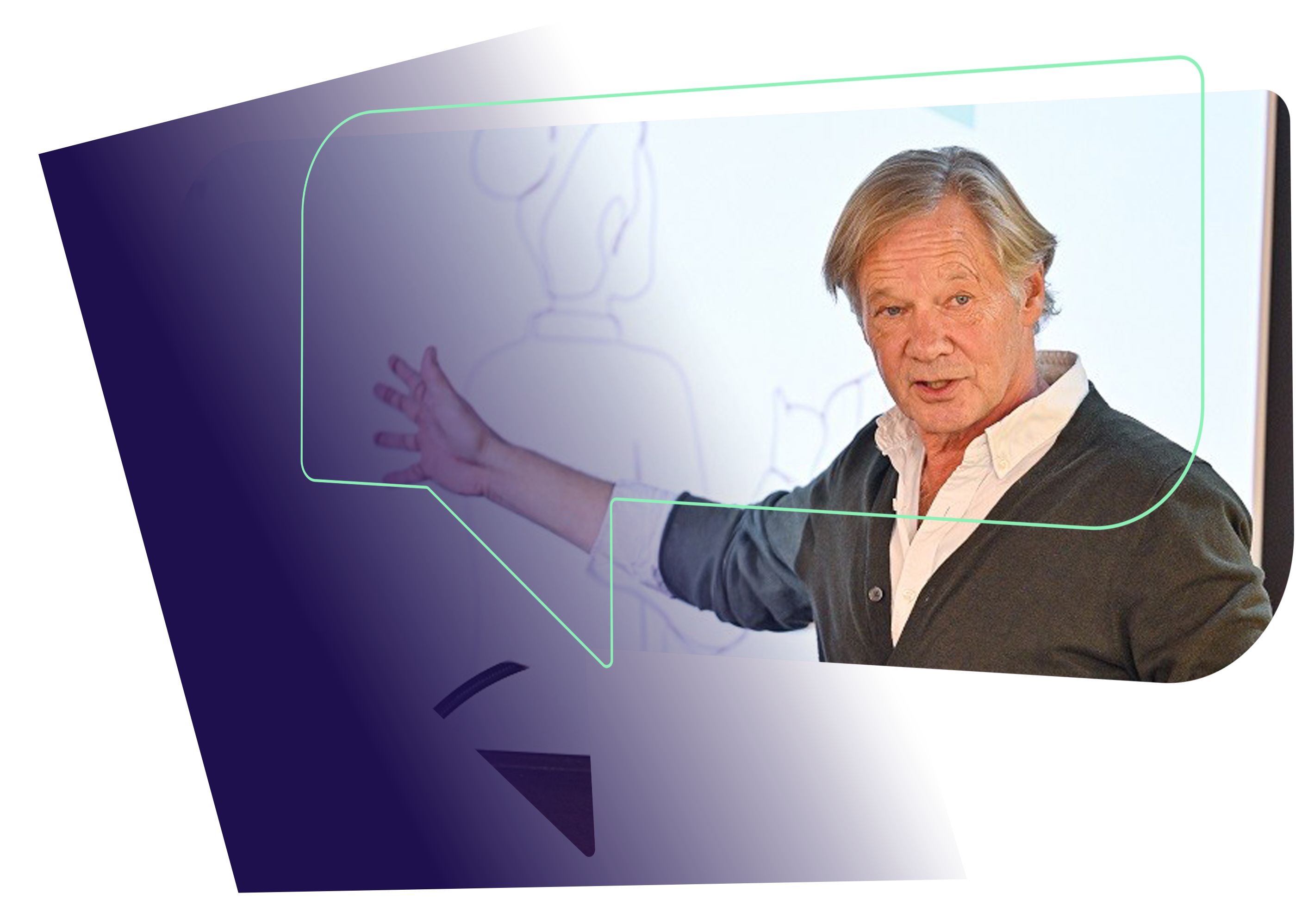
Drawing on groundbreaking research by Dik Veenman and John Higgins, the keynote series invite leaders to examine their role in creating the right conversational climate, one that fosters trust, innovation, and performance.


Every organisation develops conversational habits, some helpful, others limiting. This keynote invites leaders to reflect on these patterns and explore how to lead with dialogue in mind.
Kick-starting a wider programme or as a thought-provoking session at leadership off-sites.
Societal shifts driving the need for better dialogue.
Why top-down answers no longer work
What holds us back and how to overcome it.
Societal shifts driving the need for better dialogue.
Building trust and unlocking insight.
Five core skills to build a stronger conversational microclimate as a leader.

This keynote explores the complex dynamics of speaking up and listening up. It challenges the myths around open-door policies and invites leaders to reflect on how power shapes what gets said—and what doesn’t.
Speak Up (FT Publishing, 2019)
The Problem with Saying My Door is Always Open (HBR, 2017)
Speaking Truth to Power at Work (Hult Research, 2019)
In a world obsessed with doing, this keynote invites leaders to rediscover the value of spaciousness—the reflective space where insight, creativity, and true leadership emerge.
Permission to Pause (Reitz/Higgins, 2025)
How to Give Yourself More Space to Think (HBR, 2025) The Mindset Shift That Can Make You a Wiser Leader (Sloan, 2025)
Silence is never neutral—it always communicates something. Yet in many organisations, silence is misinterpreted as agreement, disengagement, or compliance. This keynote explores the nuanced interplay between voice and silence, and how leaders can develop the rare skill of interpreting silence meaningfully.
The Great Unheard at Work (Routledge, 2023)
Being Silenced and Silencing Others (Hult Research, 2017) Leadership Vertigo (Radical OD Blog, 2024)
The Sound of Silence (Radical OD Blog, 2021)
In times of uncertainty, it’s tempting to retreat into familiar narratives and shut out dissenting voices. But often, it’s the outsiders—the tempered radicals, the activists, the “woke”—who hold the insights we most need to hear. This keynote challenges leaders to listen differently and to treat power, politics, and conflict as essential ingredients of organisational life.
Speak Out, Listen Up (FT Publishing, 2024)
A Leader’s Guide to Navigating Employee Activism (HBR, 2024)
Leading in an Age of Employee Activism (Sloan, 2022)
The Do’s and Don’ts of Employee Activism (Hult Research, 2021)