
Written by John Higgins & Anthony Walker
Every now and again, one of us gets a request from a journalist wanting “a quick expert take” on something complicated, sensitive, and almost guaranteed to set social media buzzing. Recently, a Californian journalist asked for our thoughts on how US corporate leaders should respond to what ICE were doing in Minnesota. And honestly? We both backed away... fast.
Partly because the deadline was “within a few hours,” but mostly because anything we said risked sounding either painfully bland or like an invitation that would land us in a world of social media pain. Neither option felt especially wise.
But stepping back from the immediate pressure gave us space to reflect on something we’ve been researching since 2019 with Professor Megan Reitz: how leaders can actually engage with activism inside and around their organisations; when activism itself means very different things depending on who you ask.
Once you start digging into activism at work, things get complicated fast. You can’t simply craft a neat PR line and expect it to land cleanly, because it won’t.
Whatever you say (or don’t say) will be interpreted through the many different lenses your employees, customers, investors, and wider society bring with them.

And here’s the kicker: even saying you’re “apolitical” is, of course, a political stance.
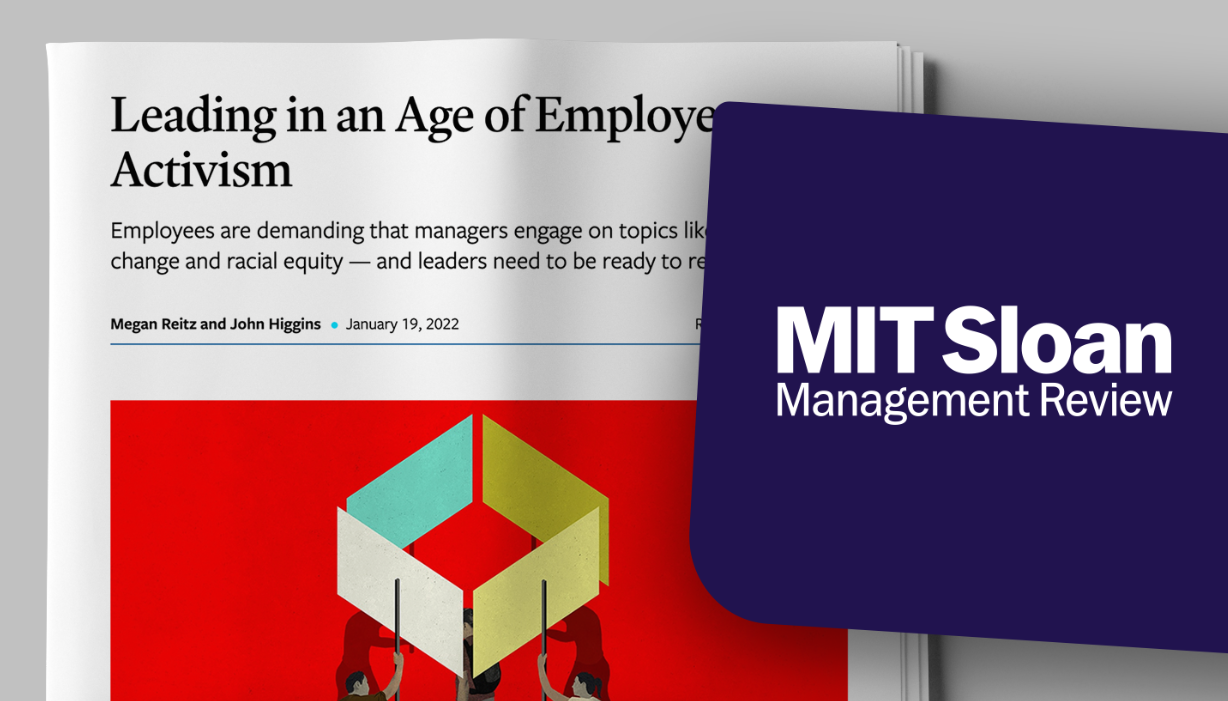
In our January 2022 article Leading in an Age of Employee Activism for MIT Sloan Management Review, which also led to John and Megan being interviewed on the Brene Brown podcast we explored the full spectrum of leadership responses. Everything from denial and disengagement, through to legal minimalism, all the way up to organisations choosing to be activists in their own right.
Looking at that work again, in the light of the ongoing turmoil in the world organisations operate in (and have a role in shaping), a few themes stand out even more clearly:
When an organisation claims to stand for something DE&I, environmental responsibility, ethical sourcing but only when it’s convenient, the gap between words and actions becomes blindingly obvious.
That’s when cynicism takes root.
And once it’s there, the whole culture starts slipping toward box ticking, lip service, and game-playing.
Trying to shield people from the consequences of speaking up can create a “mum and dad” dynamic, where leaders are expected to tidy up the moral complexity of the world. But adults at work are adults, and part of adulthood is learning to navigate discomfort, disagreement, and nuance.
If you operate as if the outside world stops at your office door, you’ll end up constantly surprised (and often blindsided) when social issues show up anyway; carried in by employees, customers, or investors who live in that real world every day.
___________________________________________________________________________
Back in 2022, we offered what we called a “management playbook” for leaders wanting to stay in meaningful dialogue around activism and the many forms of difference that show up in organisations. And truthfully? We still think that playbook holds up.
Because the challenge today isn’t crafting the perfect statement; the one that says nothing objectionable and therefore means nothing at all.
It’s building a culture where:
• People know how to speak up,
• People know how to listen,
• Conflict isn’t something to fear, and
• Everyone recognises their responsibility to each other, not just to themselves.
That’s the real work.
So… anyone up for dialogue?